Buying in Buckeye in 2026: What $400k Gets You, and What to Check First
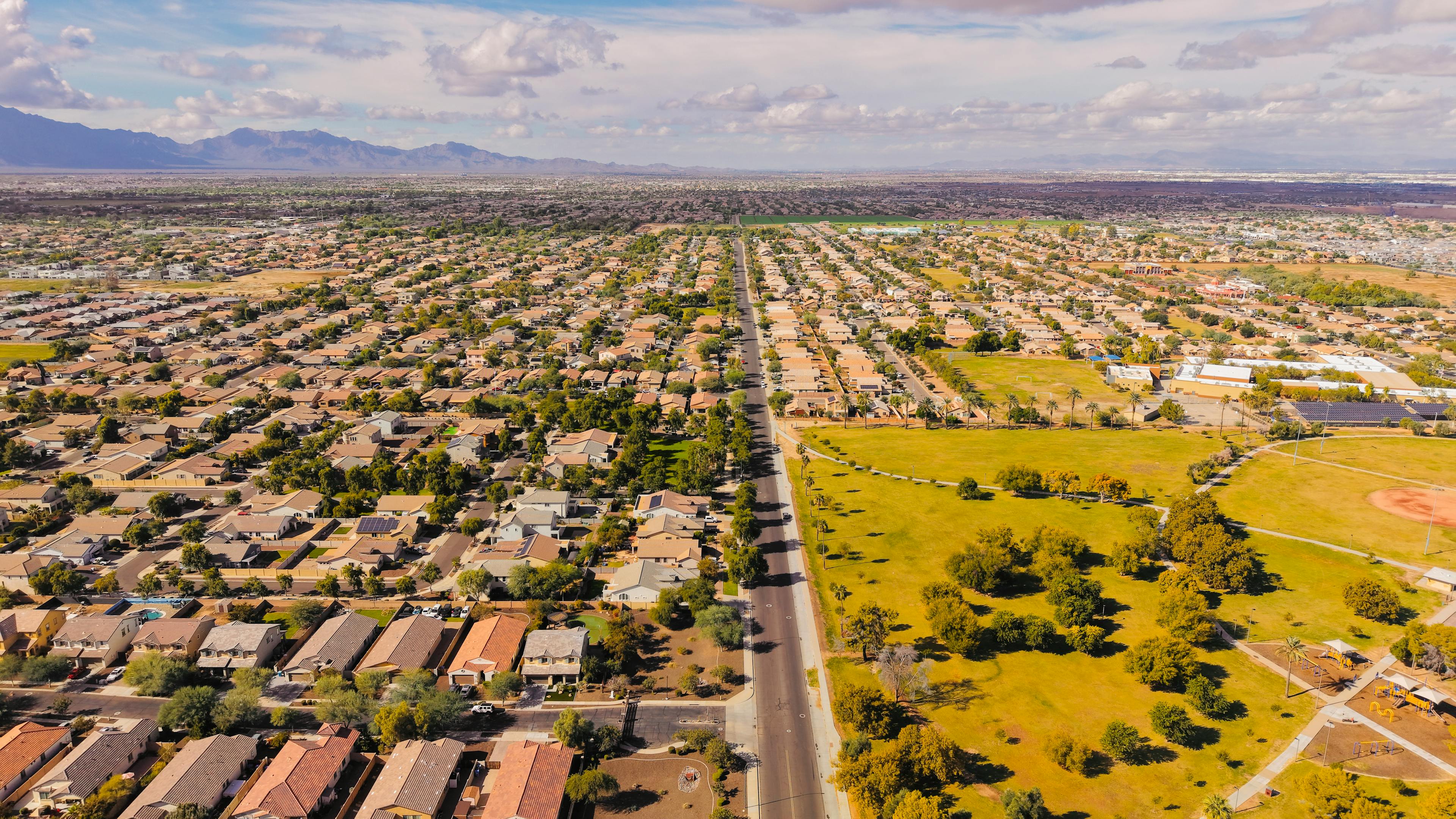
Buckeye is the most active new-construction market in the West Valley, and one of the busiest in Arizona. The city has more than 30 master-planned communities approved or building. That volume matters to you as a buyer, because in 2026 the leverage has shifted. Builder inventory is high, days on market have stretched, and values have softened from their peak. This is one of the few places in Greater Phoenix where patience is being paid.
What's actually closing in the $380k–$440k band
The typical Buckeye sale in mid-2026 is landing around the high $300s to low $400s, with new builds typically running in the $420k–$450k band. At that number, a buyer is usually getting:
- 1,800 to 2,200 square feet, four beds or three plus a den
- Built 2019 or later in communities like Verrado's outer villages, Tartesso, or Sundance
- Two-car garage, builder-grade finishes, HVAC and roof under warranty
- A 5,500 to 7,500 sqft lot, often with zero mature landscaping
Compare that to Mesa or Chandler, where the same money buys a 1970s or 1980s home needing a roof conversation. Buckeye's pitch is simple: newer, bigger, farther out.
The trade-off nobody prices in: the drive
From central Buckeye to downtown Phoenix is typically 35 to 45 minutes off-peak and can push past an hour at rush hour on the I-10. If someone in the household commutes east daily, do that drive at 7:15 on a Tuesday before you write an offer. The homes that come back on the market in Buckeye are disproportionately owned by people who skipped that test.
Three Buckeye-specific things to check before you sign
- Water and wells. Most master-planned communities are on a private water company or city water, but rural parcels north and south of town are often on shared or private wells. If you're buying acreage, get the well registration, a flow test, and the shared well agreement in writing. Arizona also flagged groundwater constraints for new subdivisions in parts of the Valley, so ask specifically how the community's assured water supply is structured. It is a boring question that protects a six-figure decision.
- Flood zones and dirt roads. Parts of Buckeye sit in FEMA flood zones tied to the Hassayampa River and local washes. A flood zone designation can add roughly $60–$180 a month in insurance, and some rural lots have legal but unmaintained road access. Pull the flood map and the access easement before the inspection period ends, not after.
- HOA and CFD stacking. Many Buckeye communities carry an HOA plus a Community Facilities District assessment on the tax bill. Individually each looks small. Stacked, they can add $150–$350 a month to your real payment. Ask the title company for the full assessment picture, then run your monthly number again.
Negotiating with builders in 2026
With hundreds of new homes sitting on the market at once, builders are moving inventory with incentives rather than base-price cuts. Rate buydowns worth tens of thousands, covered closing costs, and free upgrade packages are all showing up on spec homes that have sat 60 days or more. Two habits serve buyers well here:
- Ask about completed spec homes, not just to-be-built lots. The motivated pricing lives in standing inventory.
- Bring your own agent to the first visit and register them. Builder sales offices are staffed by people who work for the builder. That's not a criticism, it's just the structure, and you want someone on your side of the table who costs you nothing at a new build.
If you're selling in Buckeye right now
Be realistic. Resale homes are competing with builders offering warranties and rate buydowns, homes are typically taking one to three months to go under contract, and values are off their highs. The sellers doing well in 2026 are pricing at the market on day one, offering a concession toward the buyer's rate, and making the home show newer than the spec down the street. Chasing the price down in $5k steps costs more than pricing honestly at the start.
The honest answer
Buckeye in 2026 is a genuine value play with real strings attached. You get more house per dollar than almost anywhere else in Greater Phoenix, in a market that currently favors you as a buyer. In exchange you accept the commute, the young landscaping, and a set of due-diligence items, water, flood, CFD assessments, that buyers in older parts of the Valley never think about.
None of that should scare you off. It should just slow you down by about a week, which in this market costs you nothing.
If you're weighing Buckeye against staying closer in, the useful conversation starts with three numbers: your pre-approval ceiling, your true monthly ceiling with HOA and CFD included, and the longest commute you can honestly live with. Bring those, and I can show you what each option really looks like on paper before you spend a single Saturday touring.
¿Piensas comprar o vender en Mesa, Buckeye o el área de Phoenix? Jack lee cada mensaje y responde en un día hábil.